Cango Caves
Distance: 26km
Situated in a limestone ridge parallel to the well known Swartberg Mountains, you will find the finest dripstone caverns, with their vast halls and towering formations.
Mount Noah Oudtshoorn
A family-run retreat. An unexpected safe harbour in the Little Karoo.
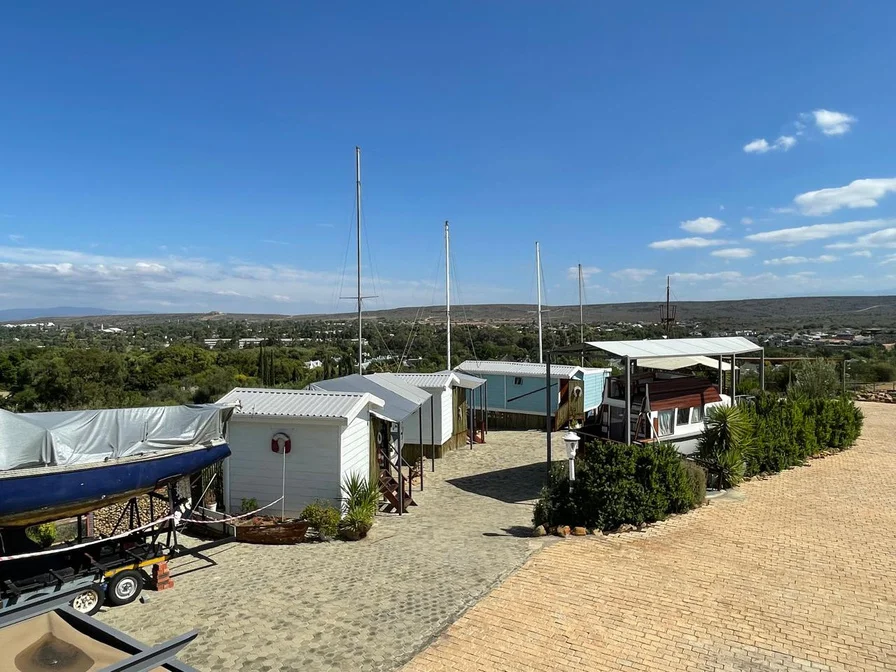
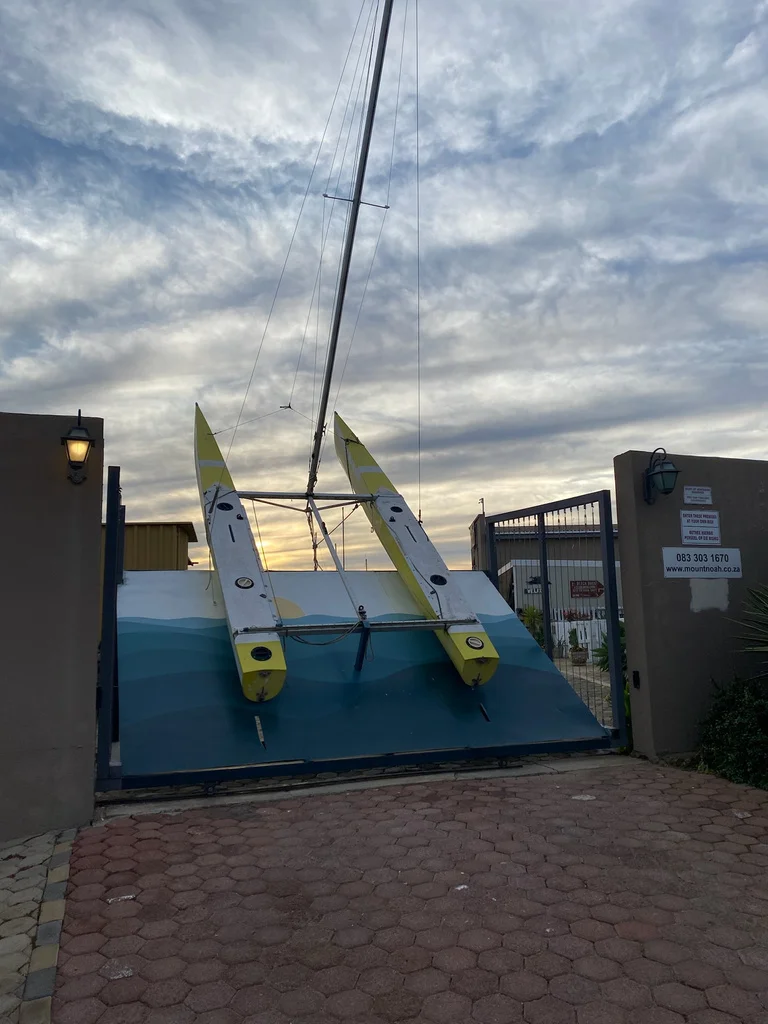
Sagitta arrived on Mount Noah when her trailer broke down on a journey to Durban. Being the closest ‘safe harbour’ to the breakdown, she unknowingly found a permanent home. On this day Dr. Warrington, owner, saw the perfect irony in an ocean vessel joining the gorgeous landscapes of the Little Karoo, a pre-historic lake, as yacht accommodation. Mount Noah Oudtshoorn, a family-run accommodation and venue, was born.
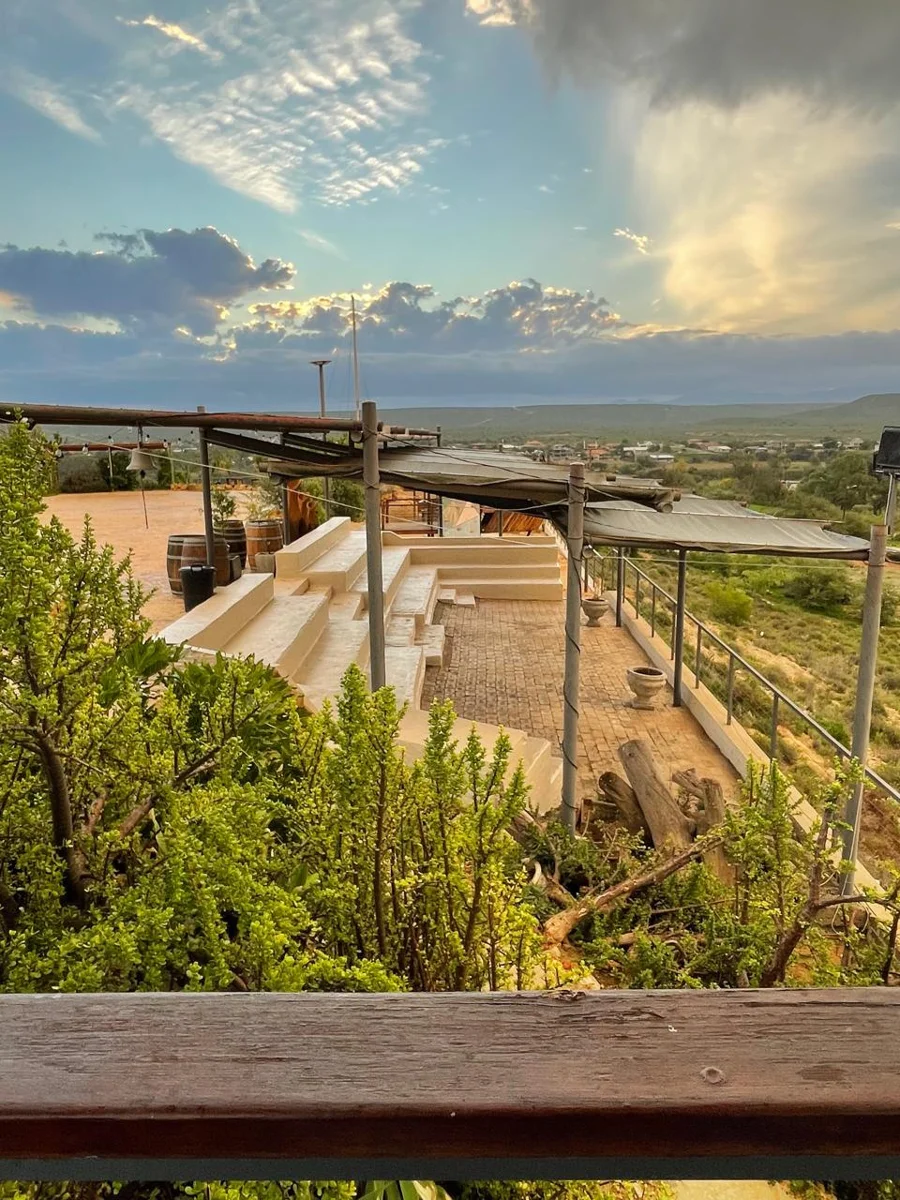
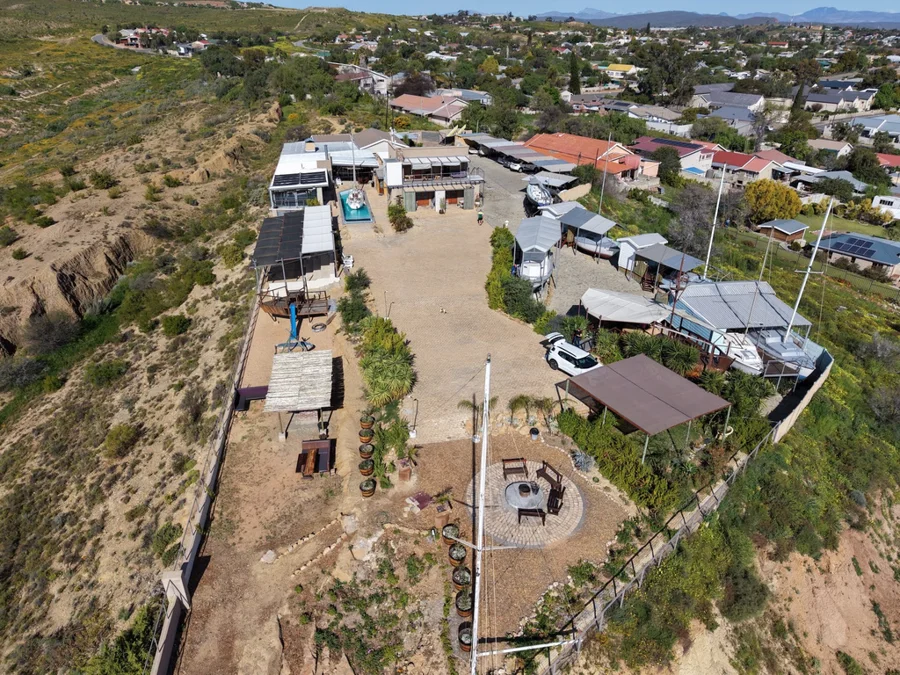
Since this day, Mount Noah has seen great transformation. ‘Bekka Round the World’ (a 22 ft Laurent Giles design yacht) previously owned by Australian sailor Greg Currie, also found a home here. On a solo trip around the world, Greg arrived on South African shores at Richards Bay, where his journey around the world was unexpectedly interrupted by the local law. He subsequently left South Africa and Bekka. A piece of an adventurer’s history was moored there until her life at Mount Noah began. The history and the perfect encapsulation of a true round-the-world sailor’s life, was what brought Bekka to Mount Noah. She has her own centre-piece ‘marina’ here, where visitors can experience the story for themselves. The other vessels on our Dry-Dock Marina, are “Juliano”, “Blew Pearl”, “Spartan”, “The Ark”, “The Riverboat” and the first, “Sagitta”. All of have been transformed into on-land yacht accommodation. Located on a cliff in Oudtshoorn, we have magnificent views of the Little Karoo as well as the Swartberg and Outeniqua mountain ranges.
Oudtshoorn, Western Cape
Oudtshoorn started as a farming community, after which the community around the Grobbelaars River grew, and requested a permanent church. The first large permanent structure, the Dutch Reformed Church, was first erected in 1839, and completed in 1879 (137 years ago). Nothing exciting happened for the following decades, except maybe the first small school that opened in 1858. Unfortunately, in 1859 (more than 150 years ago) a long and serious drought commenced, and was only broken by floods in 1869 (only 10 years later). The depression that lingered due to inability to produce during the drought years was lifted and the town of Oudtshoorn, was embarking an age of great prosperity over the next few decades.
Oudtshoorns’ riches that followed were all due to our still very popular flightless bird, the ostrich. Indigenous to Africa, this bird thrived in the Karoo's dry environment and with that, also produced magnificent feathers. They became extremely popular, high-end fashion accessories in Britain & Europe. Hats, boas, bags, dresses, feathers were wanted and sought after, everywhere. Realizing the potential and profitability, farmers in the area, ripped out their other crops and planted Lucerne, which was used as feed for the ostriches.
Owing to overproduction, the ostrich industry experienced a sudden slump in fortunes in 1885; the town's misery was compounded when it was hit by severe flooding during the same year, which washed away the nearby Victoria Bridge, which had been built over the Olifants River only the year before.
The boom had attracted a large Jewish immigrant population of about 100 families, who were fleeing from the Russian, Tsarist pogroms. As a result, Oudtshoorn came to be known as "the Jerusalem of Africa". Two synagogues were built, the first in 1888 and the second in 1896, and the first South African Hebrew school was established in Oudtshoorn in 1904. In 1891, Oudtshoorn's population had grown to 4,386 persons.
A second and bigger boom started after the Anglo Boer War. It was during this period that "feather barons", ostrich farmers who had become rich, built most of Oudtshoorn's famously lavish "feather palaces", their houses. This boom peaked in 1913, during which year the highest-quality feathers cost more than $32 a pound. Ostrich feathers were outranked only by gold, diamonds and wool, among South African exports before World War I.
The market collapsed in 1914, according to The Chicago Tribune, as a result of "the start of World War I, overproduction and the popularity of open-topped cars, which made ostrich-feather hats impractical." 80% of the ostrich farmers were bankrupted, and the ostriches were set loose or slaughtered for biltong.
The end of World War II opened new markets for ostrich leather and meat, and as a result the industry slowly recovered. For forty years, Oudtshoorn had been the most important settlement east of Cape Town. Now Oudtshoorn is still the ostrich capital of the world, and boasts with many other attractions which entice tourists on the search for sunshine, adventure & sunsets
With average 330 sunshiny days a year in Oudtshoorn, you'll have plenty to do!
Distance: 26km
Situated in a limestone ridge parallel to the well known Swartberg Mountains, you will find the finest dripstone caverns, with their vast halls and towering formations.
Distance: 2km
On a guided tour multilingual guides escort visitors through the enticing Valley Of Ancients & Cheetahland which houses various exotic and endangered animals. They have a gorgeous White Tiger named Navada and lots of other African Greats like the Lion & leopard.
Distance: Depending on chosen farm
Cango Ostrich Farm. This show farm offers a whole Ostrich tour and is situated on the road to the Cango Caves. 20km on the R328 to Cango Caves Chandelier. They have the famous Ostrich Riding experience and also have great game drives with African wild. 12km on the N12 to George High gate. The first, finest and most original ostrich show farm in Oudtshoorn. Fun and interesting for all the family. 15km on the R328 to Mossel Bay Safari Ostrich Far. Safari Ostrich Farm is a working ostrich farm in Oudtshoorn, Garden Route, South Africa. Established in 1956 as a tourist activity.
Distance: 48 km
The Swartberg Pass is for many South Africans, the rubicon of gravel road passes. There is an allure and a mystique around this old pass, coupled with its status as a national monument & stunning views which elevates this pass to the very top of the to-do list.
Distance: 46 km
Meiringspoort is a Top 10 destination. The Poort bears a tough history of floods and landslides amongst incredible hardships, yet they mastered the art of building a magnificent road through this awe-inspiring poort. We suggest making a day trip by taking the route over the Swartberg Mountain, to Prince Albert, enjoy a lunch there and then make your way back to Oudtshoorn via the N12 to De Rust, through this beautiful pass
Distance: 14 - 19 km
Karusa -One of our very own suppliers, is found out on the Cango Caves road and makes for a great tasting experience. Grundheim - On the road to Calitzdorp you’ll find this lovely Port stop with enough liquers & Ports to send you home merry.
Distance: 2 - 4 km
No matter where you go in town, you will be well looked after. We have a few great restaurants in town. Some tried & tested are: La Dolce Vita, Nostalgie, and Bello Cibo.